
THE STARTING POINT
Start with how the household lives. Resolve movement, privacy and furniture scale before choosing the finishing details.
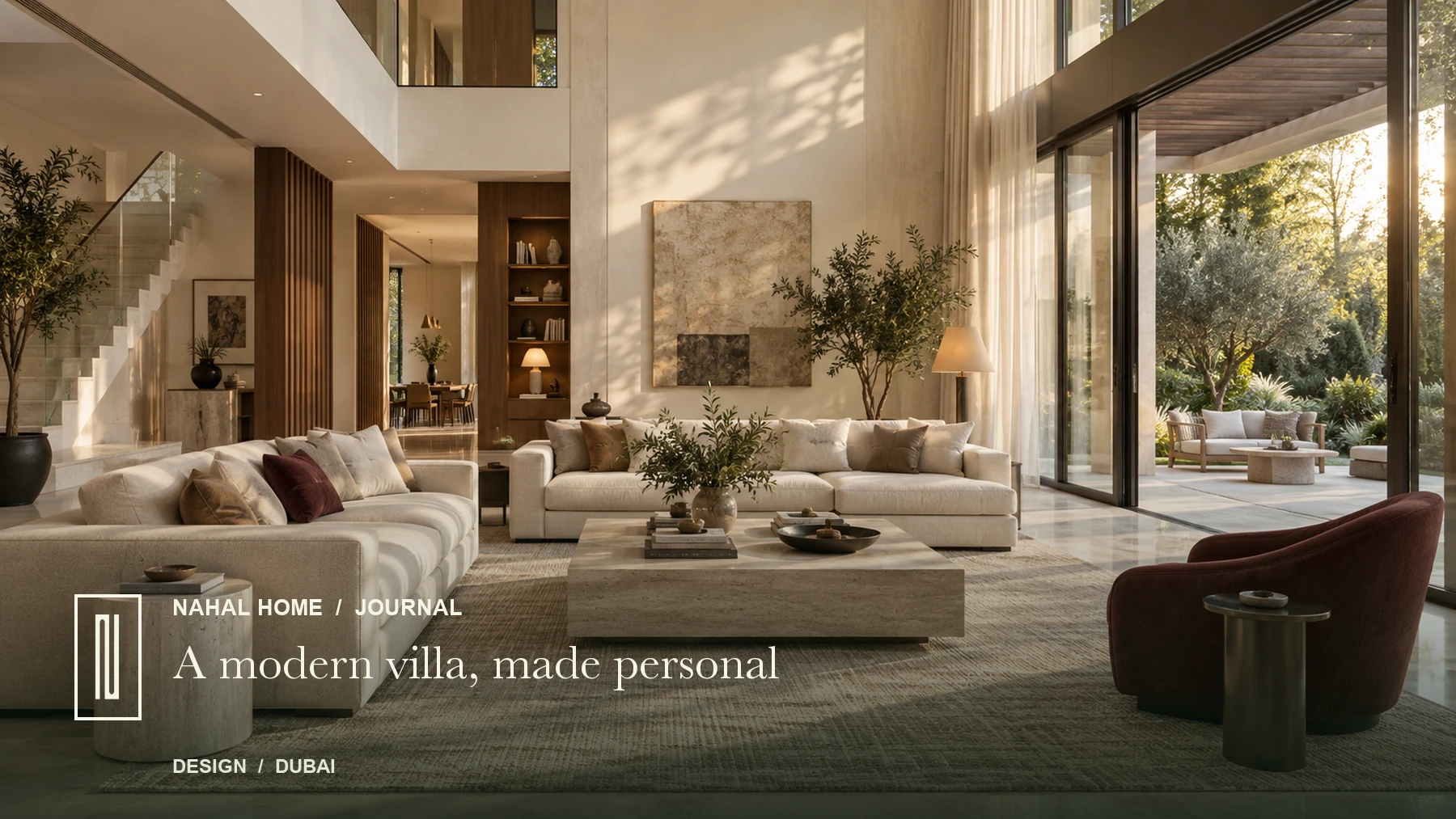
A villa can have generous rooms and still feel awkward to live in. The dining table may sit too far from the kitchen, the main sofa may face the strongest afternoon sun, or the entrance may give visitors a direct view into family life. Modern villa interior design in Dubai begins by resolving these relationships. The materials and furniture then give the home its character.
The home should reflect the people who live there. A favourite painting, the way the family hosts, and the need for a quiet place to read can all shape a stronger brief than a collection of fashionable interiors.
Build the brief around a normal day
Walk through a weekday and a weekend. Who leaves first in the morning? Where do children do homework? How often do guests stay? Is a formal sitting room used regularly, or does everyone gather around the kitchen? Describe the activities before assigning furniture to rooms.
Where the household wants a majlis or a separate guest sitting room, consider its relationship to the entrance and guest washroom. Family spaces can sit further into the home, with a route that does not require visitors to pass through them. The arrangement should follow the household's preferences; there is no single layout appropriate to every family.
Record what already works, too. A well-loved dining table or a collection of books may be worth designing around. Include their dimensions and condition in the brief so the new furniture can work alongside them.
Give large rooms a clear purpose
In a long living room, pushing every seat to the perimeter can leave an empty centre and make conversation difficult. Test a smaller seating group with a rug, a table and lamps. A separate reading chair or writing desk can occupy the remaining area if it serves a real need.
Draw the furniture at its actual size, including the space needed to pull out dining chairs, open cabinets and walk between zones. In a double-height room, review the composition at both seated and standing eye level. The ceiling height does not require every piece below it to be oversized.
The British Institute of Interior Design describes early collaboration on spatial planning, furniture layouts and fixed finishes as part of a designer's contribution to a residential project. This supports settling the layout before the final selections. Read the BIID guidance.
Plan for daylight and privacy together
Visit the rooms at different times of day. Look at direct sun on seating, reflections on screens, and views into the house after dark. A window treatment should respond to these conditions as well as to the interior palette. A sheer may soften the daytime view, while a separate opaque layer offers more control when privacy is needed.
The US Department of Energy's daylighting guidance identifies glare and unwanted heat as considerations in window and shading design. For an existing Dubai villa, the useful application is to review the orientation and glazing with the design team before specifying shading; fabric alone should not be assumed to resolve the building's heat gain. Read the daylighting guidance.
Choose a material language, then allow variation
A small group of related finishes can connect the entrance, sitting rooms and bedrooms. For example, a warm timber tone might appear in the entrance joinery and selected furniture, while a limestone tone carries through floors or smaller surfaces. Different textures prevent the rooms from feeling identical.
Review samples beside each other in the villa. Check them in daylight and under the proposed evening lighting. Ask for the manufacturer's cleaning instructions and intended use before confirming stone, timber or upholstery. A dining chair used every day needs a different selection process from an occasional chair in a guest bedroom.
Leave room for personal details and future use
Reserve wall space for art before positioning switches, lights and cabinetry. Give treasured objects a deliberate place rather than filling every shelf during installation. A guest room that can also support reading or occasional work may serve the family more often than a room arranged solely for a rare visit.
Consider ease of movement for visitors and family members with different needs. Steps, thresholds, door openings and bathroom arrangements deserve attention early. Dubai Municipality publishes an accessibility resource for villas; the design team should check the relevant guidance against the specific property. Explore Dubai Municipality's accessibility resources.
Before approving the design, walk the plan once more as a family: arrive with groceries, seat your usual guests, open the storage and imagine the evening lighting. This often reveals small changes that make the house easier to use.
FIVE QUESTIONS ANSWERED
Questions about this topic
What makes a villa interior modern?
Clear spatial planning, considered proportions and a coherent selection of materials are useful starting points. Modern interiors can include antiques, family artwork and traditional elements when they fit the way the home is used.
How can a large villa feel more comfortable?
Create seating groups sized for conversation, give each area a purpose and provide lighting close to where people sit or read. Check the distance between furniture rather than arranging everything around the room's edges.
Can a modern villa include a majlis?
Yes. Plan the majlis around the household's hosting preferences, guest access and privacy. Its furniture and finishes can relate to the rest of the home while giving the room its own character.
How should curtains be selected for a villa?
Review the window orientation, direct sunlight, evening privacy and the required operation. Check fabric samples in the room and confirm the track, lining and clearance needed for the proposed arrangement.
When should an interior designer become involved?
Bring the designer in while layouts, fixed finishes, lighting and furniture positions can still be coordinated. For an existing villa, begin with a measured survey and a brief covering the household's daily routines.